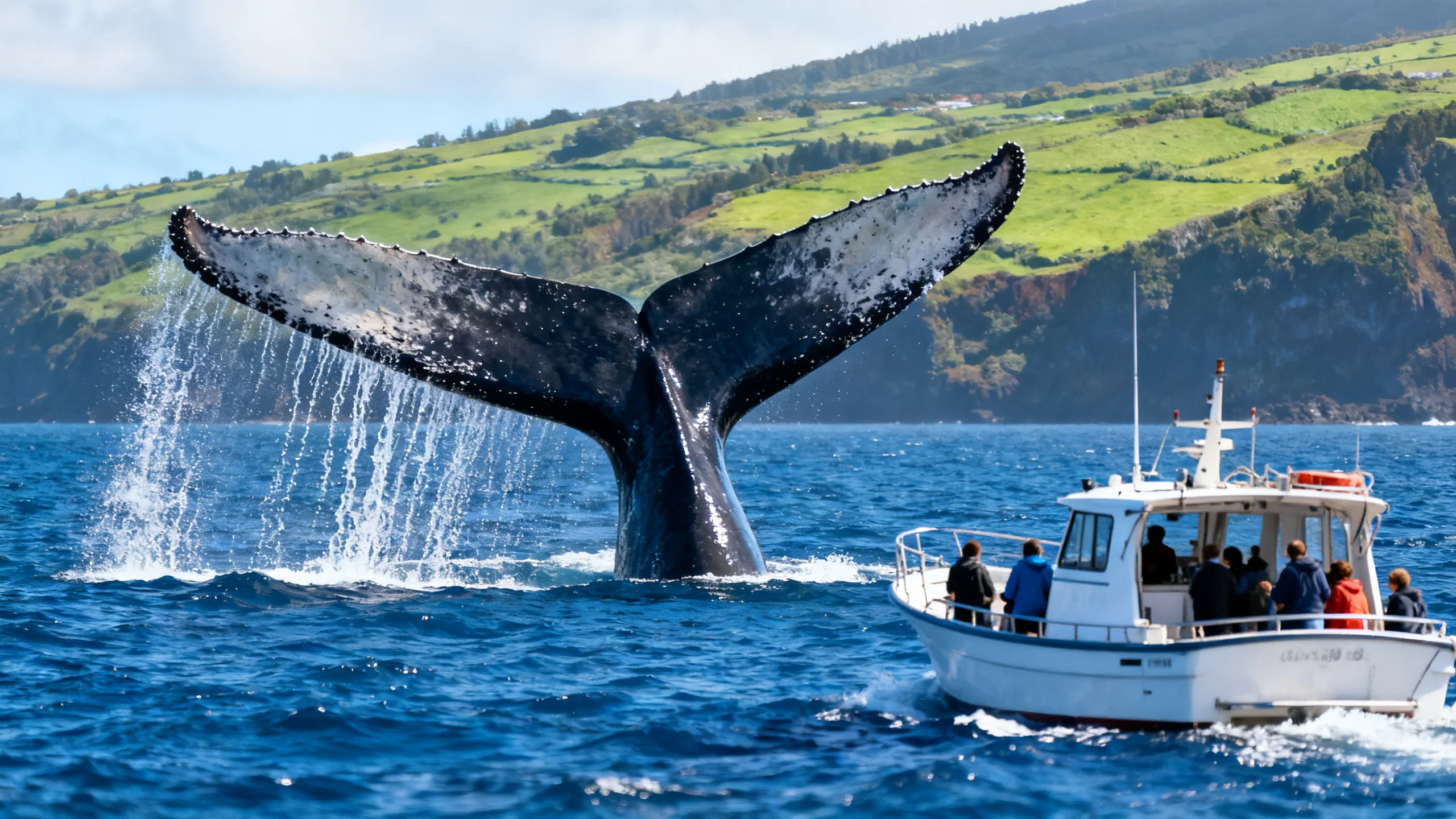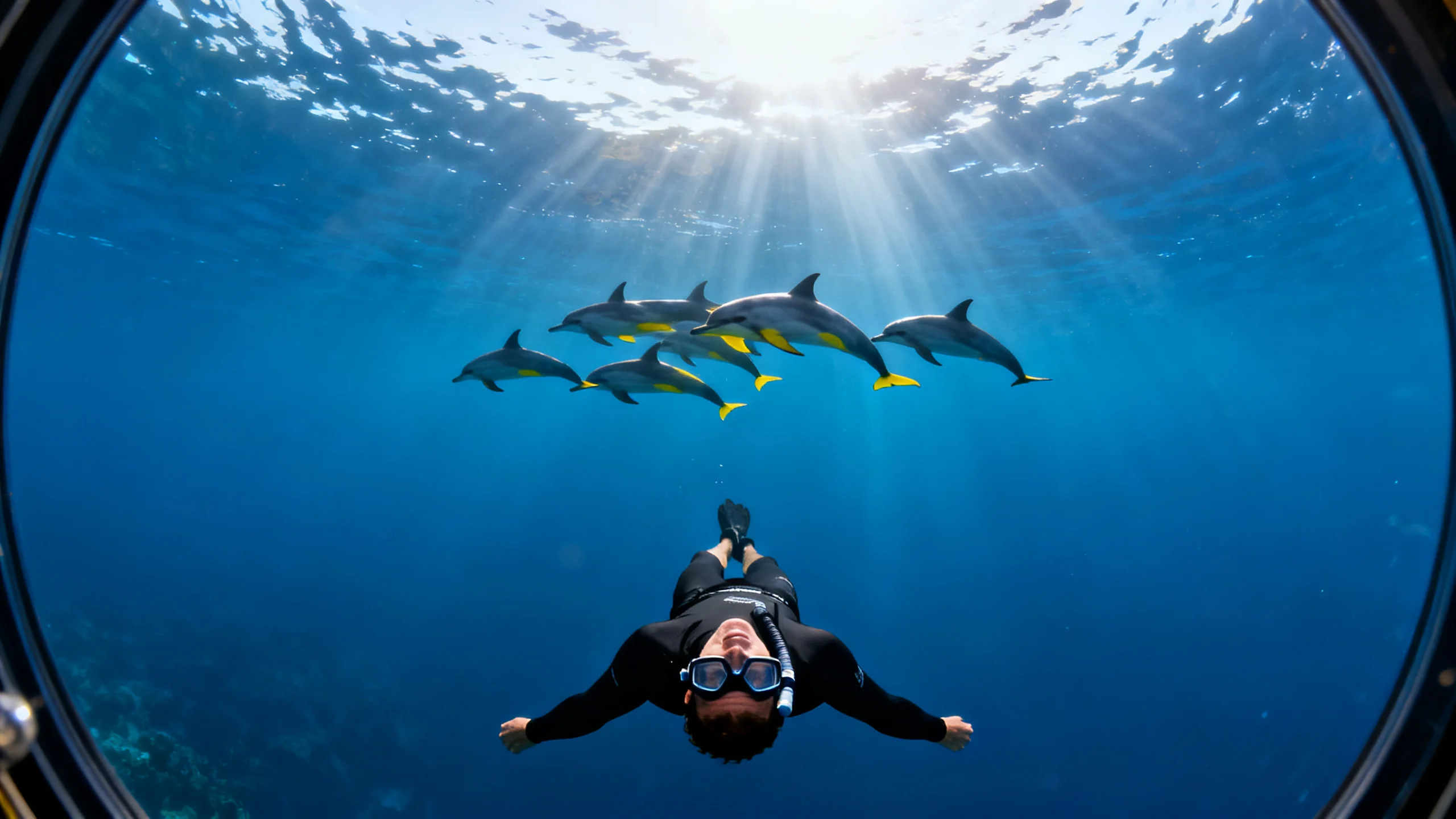
Five resident dolphin species, year-round encounters, and how dolphin-focused trips differ from whale watching. Where to go on São Miguel and Pico.
Most travellers book a “whale watching trip” and assume dolphins are a side dish. They are not. Five dolphin species live around the Azores year-round, and on a typical three-hour trip you are far more likely to spend long stretches surrounded by a hundred bow-riding common dolphins than to spot a single sperm whale. If dolphins are what you want, you can plan the trip around that.
This guide covers what you actually see, when you see it, and which boats lean dolphin-first.
The five species you might see
Five dolphin species live in Azorean waters year-round. Each behaves differently, and on a single trip you typically meet two or three.
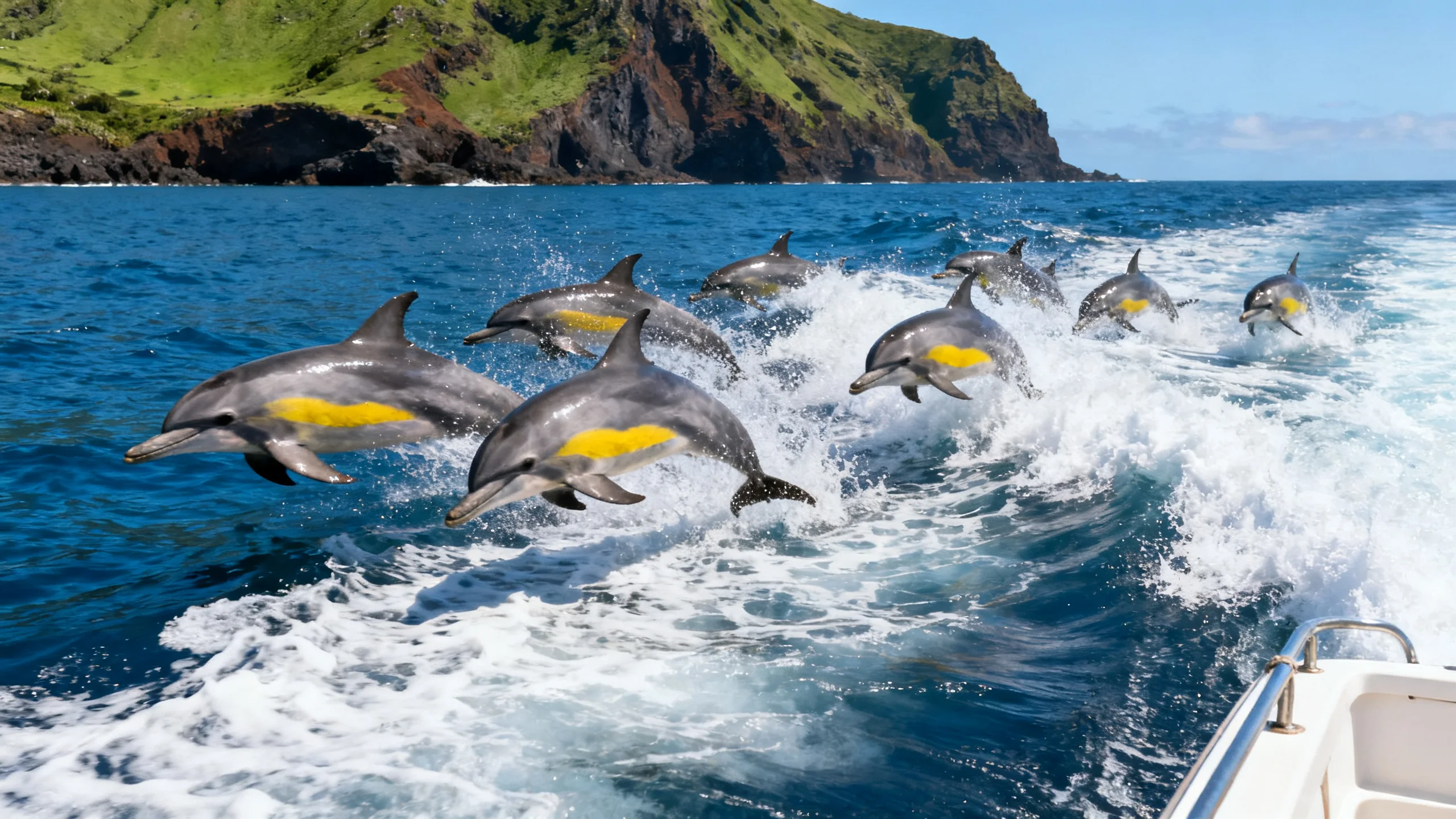
- Common dolphin (Delphinus delphis). The most frequent encounter, especially in spring and summer. Pods of 50 to 300, very active, love to bow-ride. The yellow flank patch makes them easy to ID.
- Bottlenose dolphin (Tursiops truncatus). Large, grey, curious. Resident pods of 20 to 60. The “Flipper” species.
- Risso’s dolphin (Grampus griseus). Pale grey with white scratches across the body (intra-species scarring). Squid-eaters, smaller pods of 5 to 30, often slower-moving.
- Atlantic spotted dolphin (Stenella frontalis). Seasonal visitor, mostly June to October. Smaller, fast, acrobatic.
- Striped dolphin (Stenella coeruleoalba). The trickiest to encounter. Fast offshore species, big pods of 100+, spectacular when they porpoise.
Sightings on a given trip vary, but it is rare to come back with nothing. Across spring and summer the average is two to three species per outing.
How it differs from whale watching
Same boat, same departure, often the same skipper. The difference is in what the spotter on shore is looking for and how the boat reacts when something is found.
Whale-focused trips prioritise sperm whales: they steam farther offshore, slow down at depth contours where the whales feed, and stop the boat at a respectful distance from a single animal for ten minutes. Dolphins encountered along the way are a bonus.
Dolphin-focused trips stay closer to shore, follow the spotter to the nearest active pod, and let you spend twenty to thirty minutes surfing with them. You move more, you see more individuals, you take more pictures.
The best operators are honest about this and let you pick. If they list “swim with dolphins” as an option, that is a different trip entirely (more on that below).
Where to go: island by island
São Miguel is the default, but if you are island-hopping the smaller ports often run smaller boats with better encounters.
From Ponta Delgada (São Miguel)
The combined whale and dolphin watching trip from Ponta Delgada is the most reliable starting point. Three hours, semi-rigid Zodiac, small group, departures throughout the day. Around €70. The same operator has run dolphin-focused options in summer; ask at booking.
From Lajes (Pico)
The whale and dolphin watching trip from Lajes do Pico runs from the historic whaling village turned watching capital. The boats here are smaller and faster, the dolphin encounters are often shorter but more concentrated, and the surrounding scenery (Pico volcano rising above the boat) is unmatched. Around €45–55. Best if you are island-hopping anyway.
From Horta (Faial)
The research whale and dolphin expedition from Horta is the most scientifically-oriented option. Four hours instead of three, a marine biologist on board, hydrophone deployed. Around €90, 4.9 rating. If you want to learn what you are seeing rather than just seeing it, this is the pick.
From Angra (Terceira)
The whale and dolphin watching boat tour from Terceira is less famous than the central group but the waters off Terceira are genuinely good for Risso’s dolphins. Smaller crowd, often calmer sea. Around €70.
What the day actually looks like
A typical dolphin-focused morning out of São Miguel looks like this.
| Time | What happens |
|---|---|
| 9:00 | Check in at the operator’s office on the marina, briefing video, sign the waiver. |
| 9:30 | Board the Zodiac, distribute waterproof jackets. |
| 9:45 | Depart, head 10 to 20 minutes offshore. The shore spotter has already radioed pods. |
| 10:00 | First encounter. Common dolphins surf the bow wave for around 15 minutes. |
| 10:30 | Second encounter, often a different species (bottlenose or Risso’s). Engine cut. |
| 11:30 | Return to Ponta Delgada, hot drink on the dock. |
Bring sunscreen, sunglasses on a strap, a hat with a chin cord, and a small dry bag for your phone. The spray on a Zodiac is constant.
Frequently asked questions
Will I definitely see dolphins?
Statistically yes. Operators around Ponta Delgada quote 95–98% trip success rates for dolphins (lower for whales). The shore spotters mean the boats rarely leave the harbour without a confirmed sighting on the way. All reputable operators offer a free second trip if you do not see anything, though it is very rare to need to use it.
Are children allowed?
Yes, most operators take children from age 5 or 6 on Zodiacs and from age 3 on larger catamarans. A catamaran is the gentler ride if you have small kids: slower but more stable, and easier to walk around. Ask for the catamaran option at booking. Not all operators list it publicly.
What about seasickness?
A real consideration. The Atlantic is rarely glassy. Take a non-drowsy seasickness tablet 30–45 minutes before boarding (Stugeron or Dramamine work well), eat a small breakfast, sit in the middle of the boat, and keep your eyes on the horizon. The morning slot is usually calmer than the afternoon.
Can I touch the dolphins?
No. The Azores has strict rules: boats stay at a respectful distance, engines must be cut or slowed when dolphins approach, and physical contact is prohibited. The dolphins come close on their own (bow-riding is play, not feeding) but no touching, no feeding, no swimming with them on a standard watching trip. If you want in-water encounters, look at a licensed swim-with-dolphins trip instead.
What if the trip is cancelled for weather?
Full refund or rebooking. Cancellations happen 5–10% of the time in winter (October–March) when north-Atlantic swells get too big, much less often in summer. Build a buffer day into your itinerary if you are travelling in the off-season and the trip really matters.