The nine islands of the Azores
Nine volcanic islands scattered across 600 kilometres of mid-Atlantic ocean, divided into three geographic groups. Each has its own geology, cuisine, dialect, and reasons to visit.
The archipelago
In numbers
The Azores stretch from Santa Maria in the southeast to Corvo in the northwest, a distance of around 600 kilometres. They are administratively part of Portugal but lie almost 1,500 kilometres west of Lisbon, closer to North America than to mainland Europe.
Eastern group
São Miguel · Santa Maria
The largest and the warmest. São Miguel hosts the only international airport (PDL) with direct long-haul flights.
Central group
Terceira · Pico · Faial · São Jorge · Graciosa
Tightly clustered, connected by inter-island ferries (Atlanticoline) and the inter-island airline (SATA Azores Airlines).
Western group
Flores · Corvo
The most remote. Reached only by air with a connection in another Azorean island. Increasingly susceptible to weather cancellations.
All nine
The nine islands, side by side
Each card links to the island guide where it exists. For islands we have not covered yet, the card is informational only, these pages are rolling out through 2026.
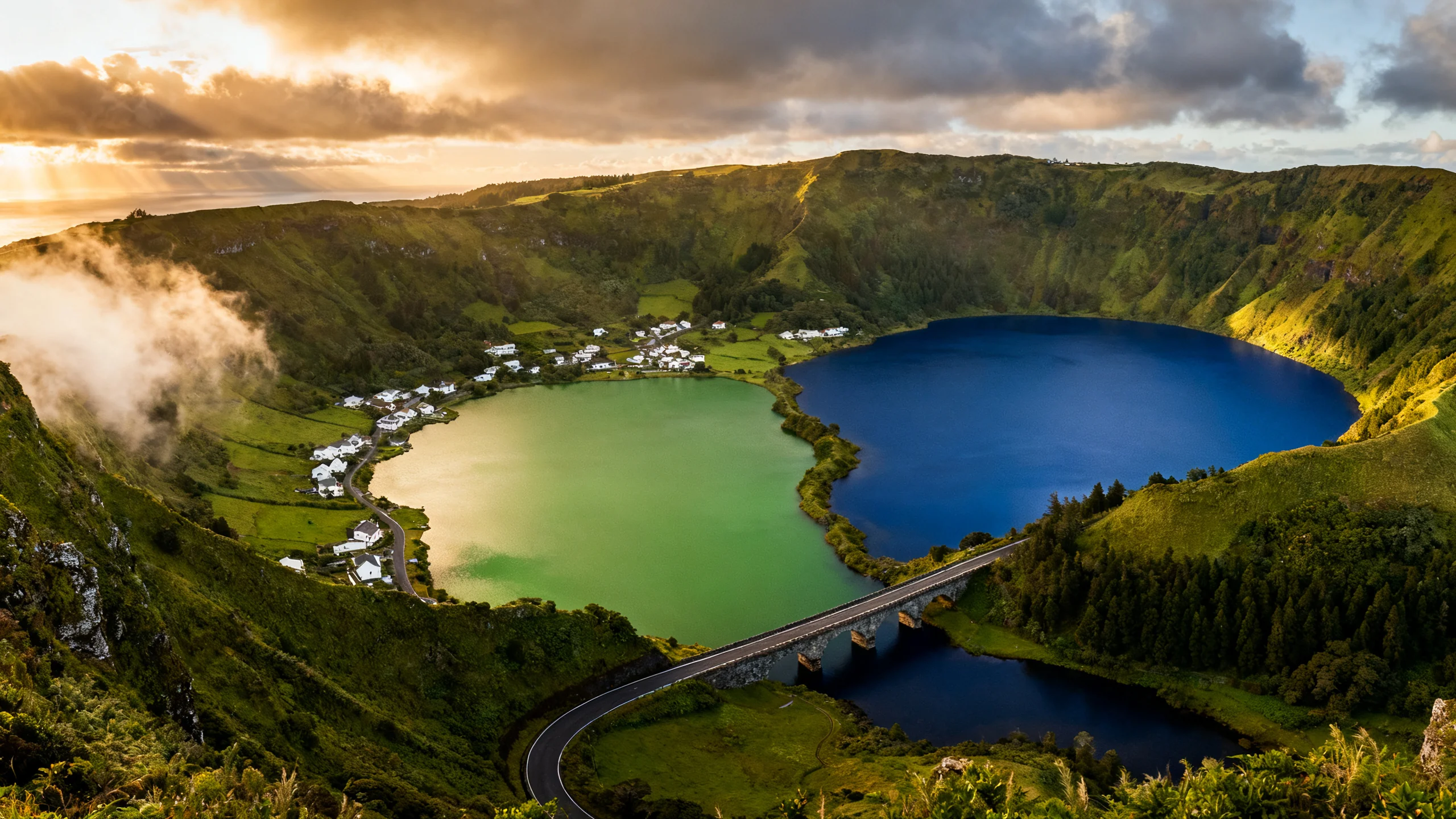
São Miguel
The green island
The largest island and the natural first stop. Twin crater lakes at Sete Cidades, geothermal valley at Furnas, reliable whale watching, and the only working tea plantation in continental Europe.
- Best for:
- First-time visitors, all-rounders
- Suggested stay:
- 4–7 days
- Airport:
- PDL
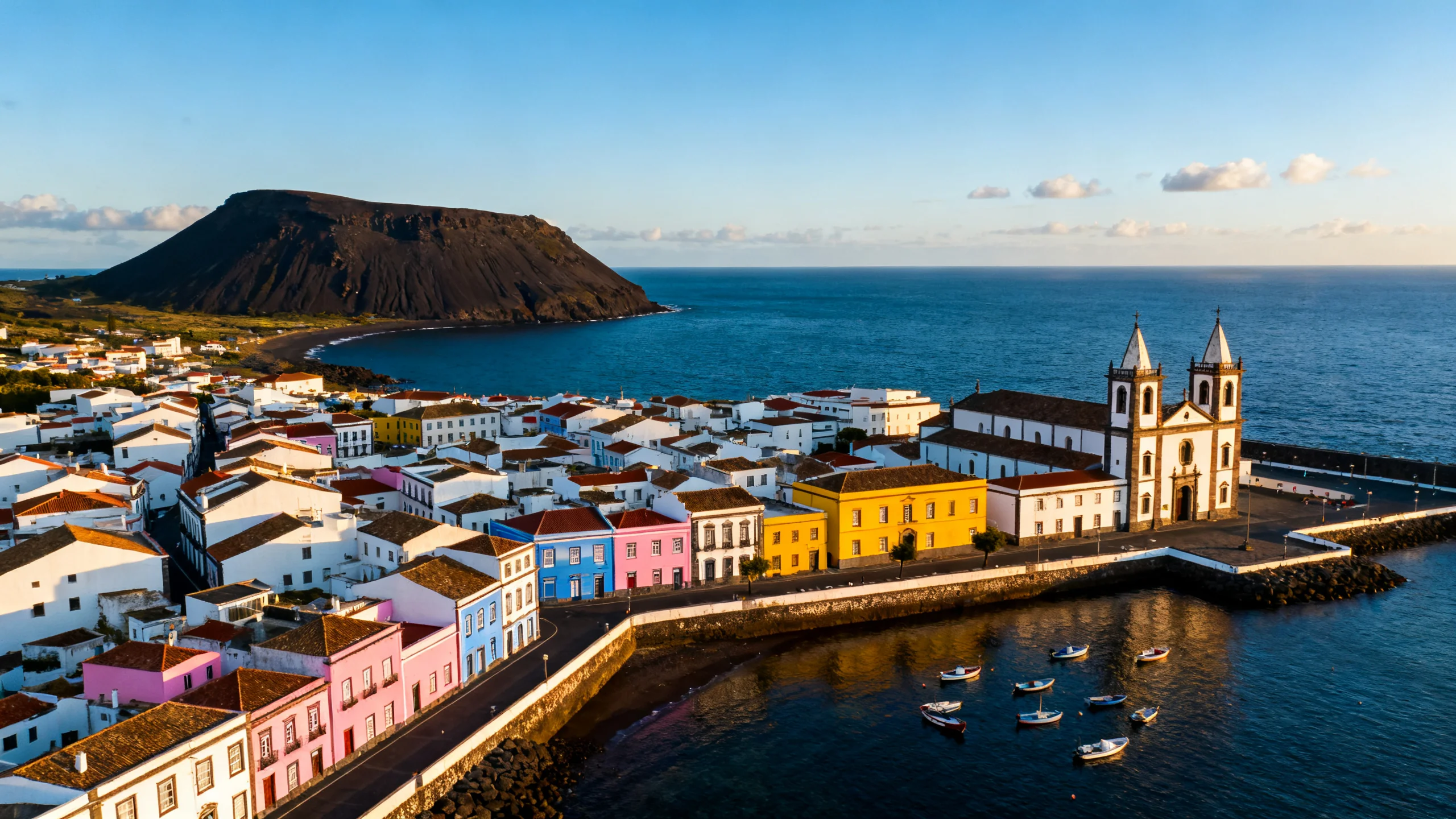
Terceira
The lilac island
UNESCO-listed historic centre of Angra do Heroísmo, the underground lava cavern of Algar do Carvão, and the most distinctive bull-running festival in Portugal (tourada à corda).
- Best for:
- History, culture, festivals
- Suggested stay:
- 3–5 days
- Airport:
- TER
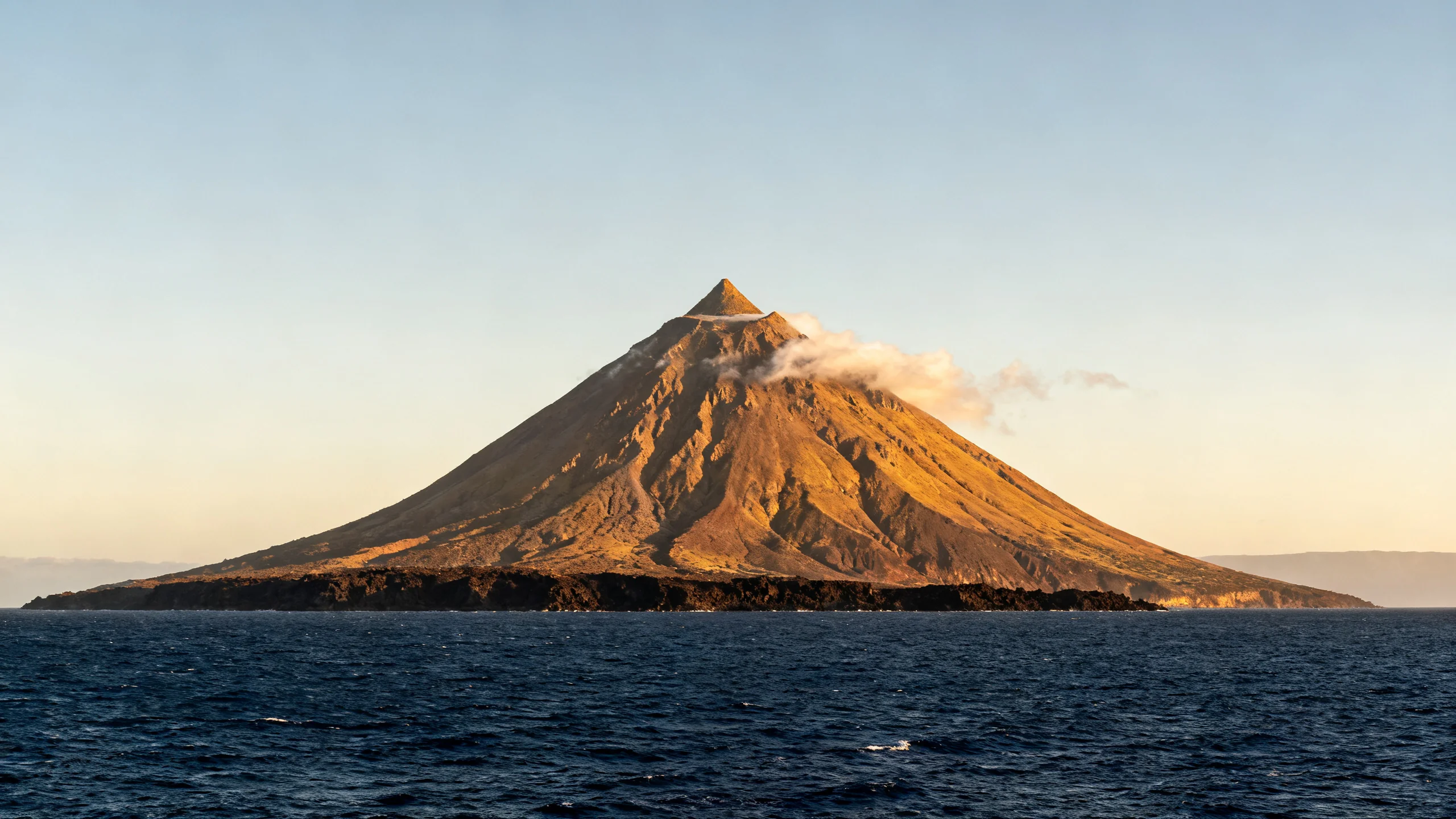
Pico
The grey island
Dominated by the 2,351-metre volcano of the same name, Portugal’s highest peak. UNESCO-protected vineyards grown directly on lava fields, and one of the historic whaling bases of the Atlantic.
- Best for:
- Volcanic landscapes, wine, hikers
- Suggested stay:
- 3–5 days
- Airport:
- PIX
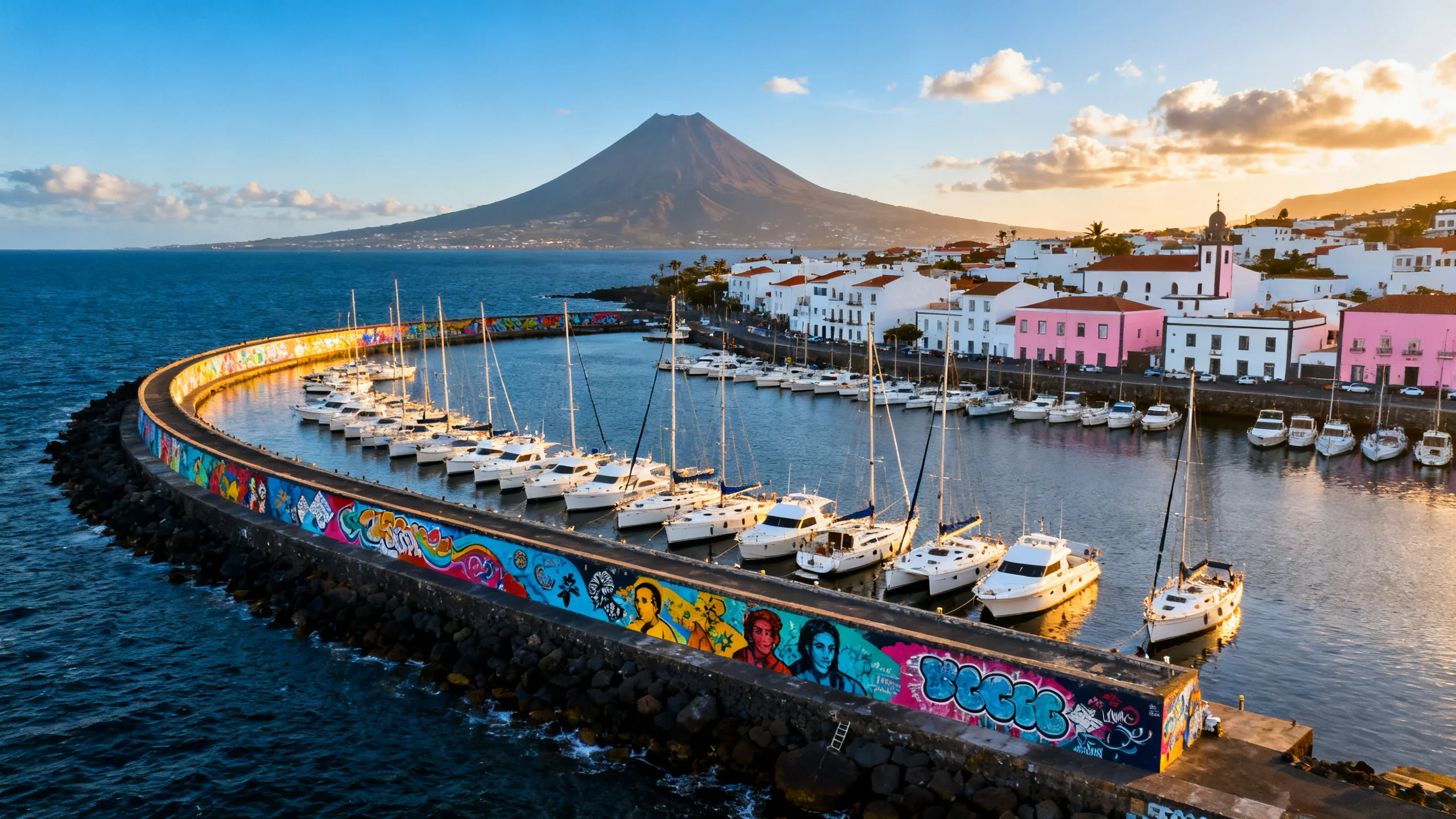
Faial
The blue island
Marina of Horta, the legendary sailors’ port of the mid-Atlantic, painted with the murals of thousands of crews. Capelinhos volcano remains the most recent landmass added to Europe (1957–58).
- Best for:
- Sailing, marine culture, photography
- Suggested stay:
- 2–4 days
- Airport:
- HOR
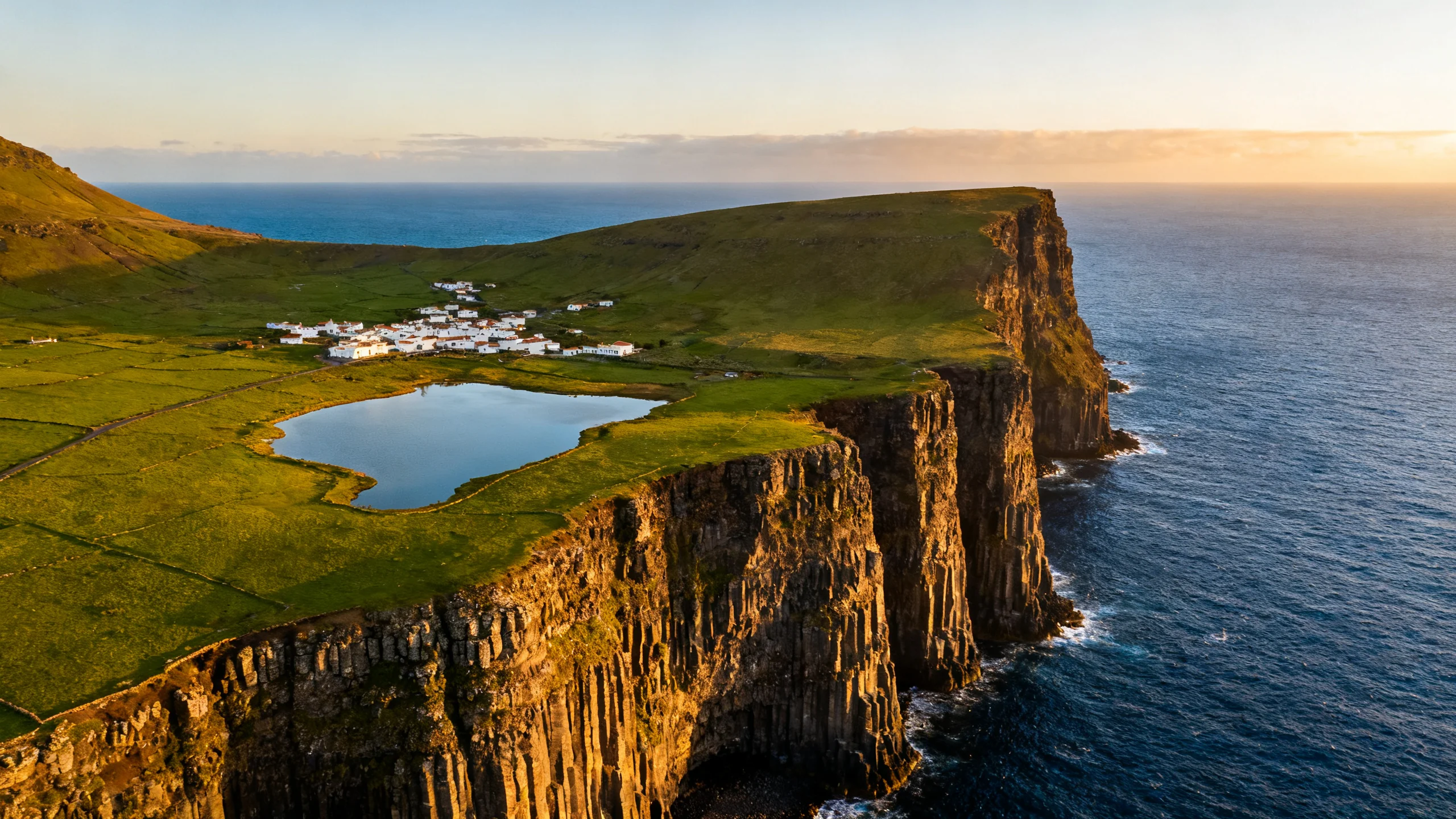
São Jorge
The island of fajãs
A long narrow ridge of dramatic basalt cliffs, dropping into fajãs, flat coastal platforms formed by ancient landslides. Famous for its AOP cheese and trail-running terrain.
- Best for:
- Hikers, cheese lovers, off-the-beaten-track
- Suggested stay:
- 2–4 days
- Airport:
- SJZ
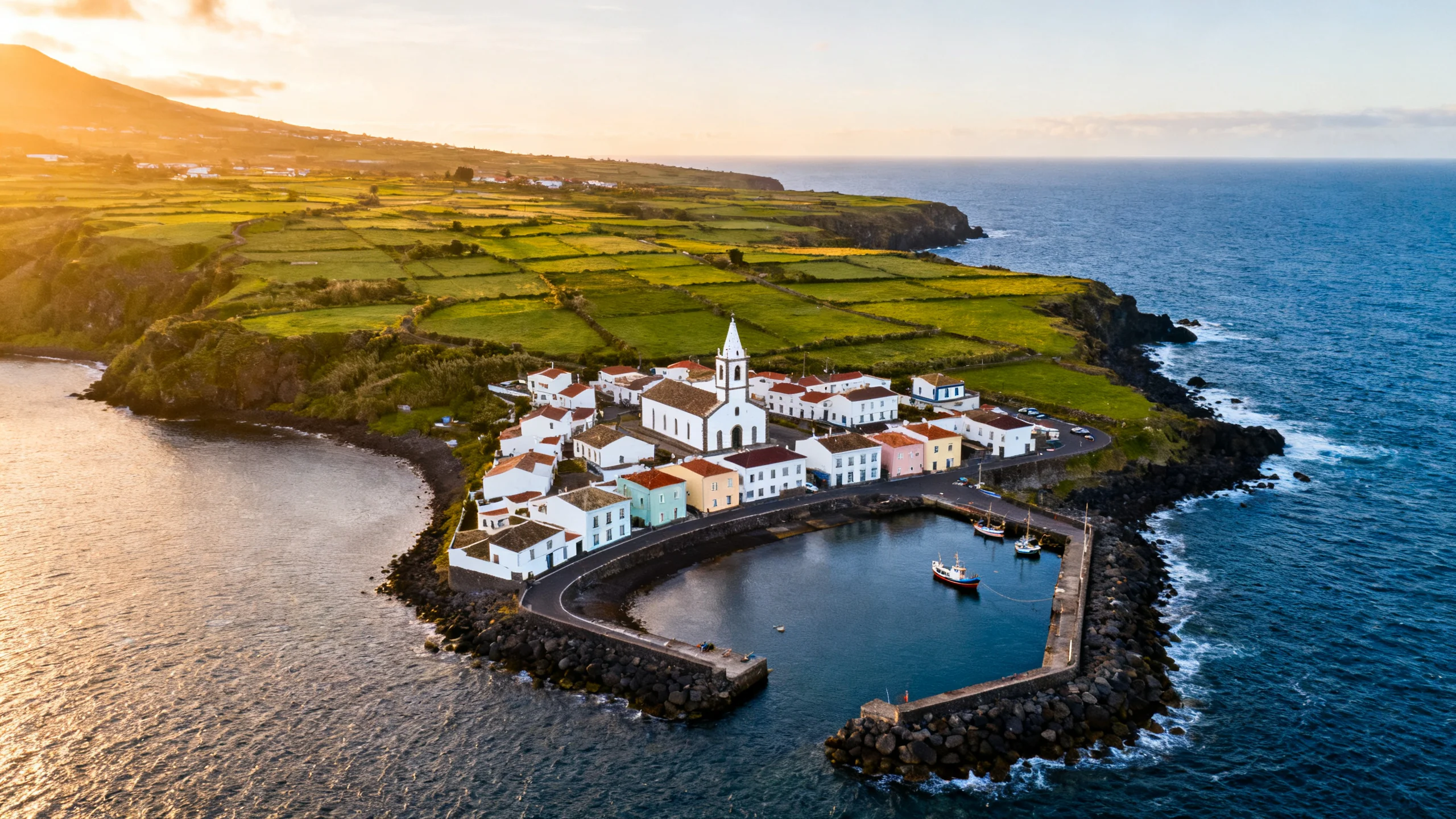
Graciosa
The white island
A UNESCO Biosphere Reserve, quieter than its larger neighbours. Best known for the Caldeira, a vast volcanic crater you can descend into, including its underground sulphur grotto.
- Best for:
- Quiet getaways, biosphere reserves
- Suggested stay:
- 2 days
- Airport:
- GRW
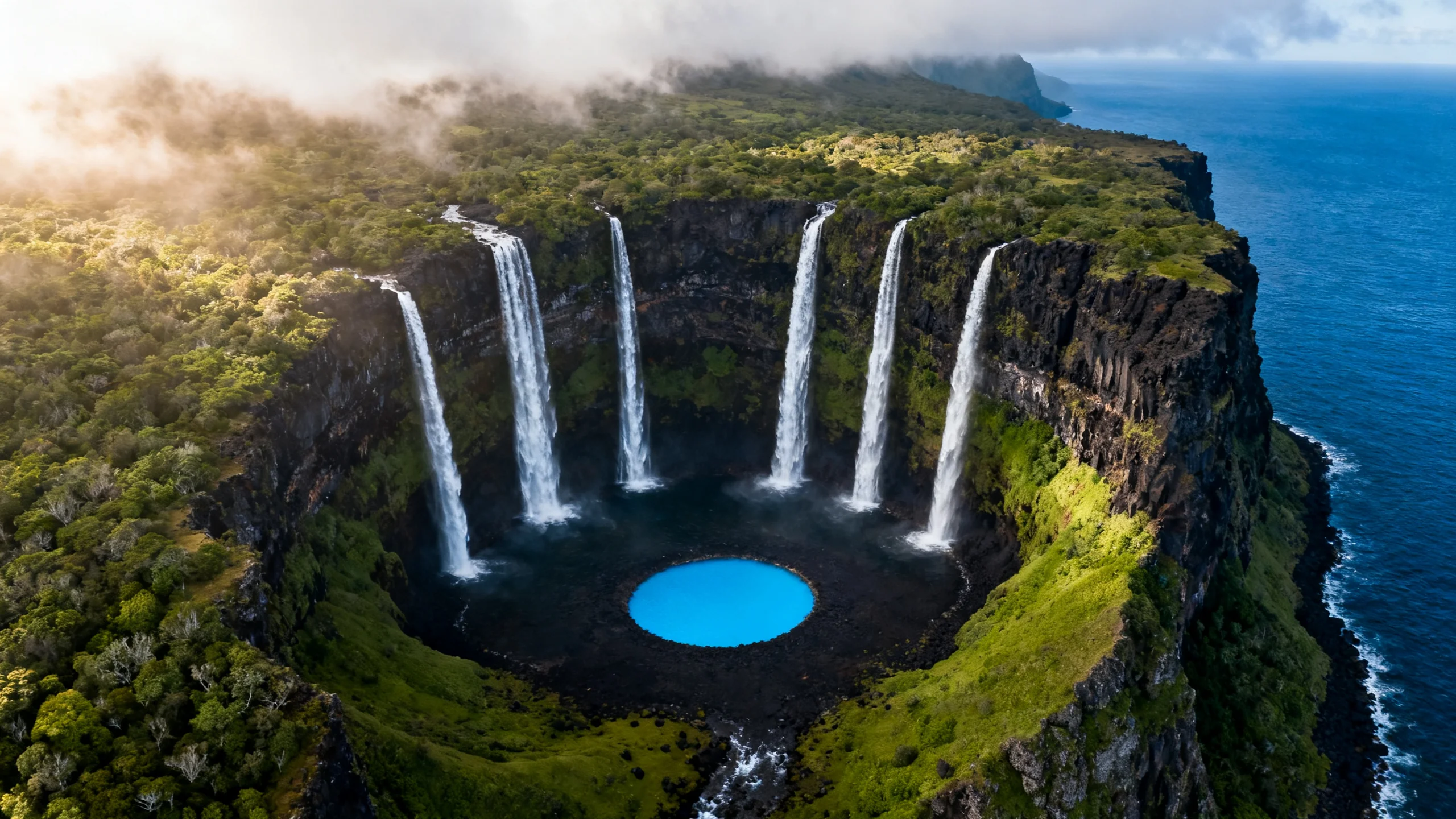
Flores
The pink island
The westernmost point of Europe. Vertical waterfalls plunge from the crater rims into lagoons, the kind of place where the postcards look digitally enhanced and aren’t.
- Best for:
- Photographers, hikers, remote travel
- Suggested stay:
- 3–4 days
- Airport:
- FLW
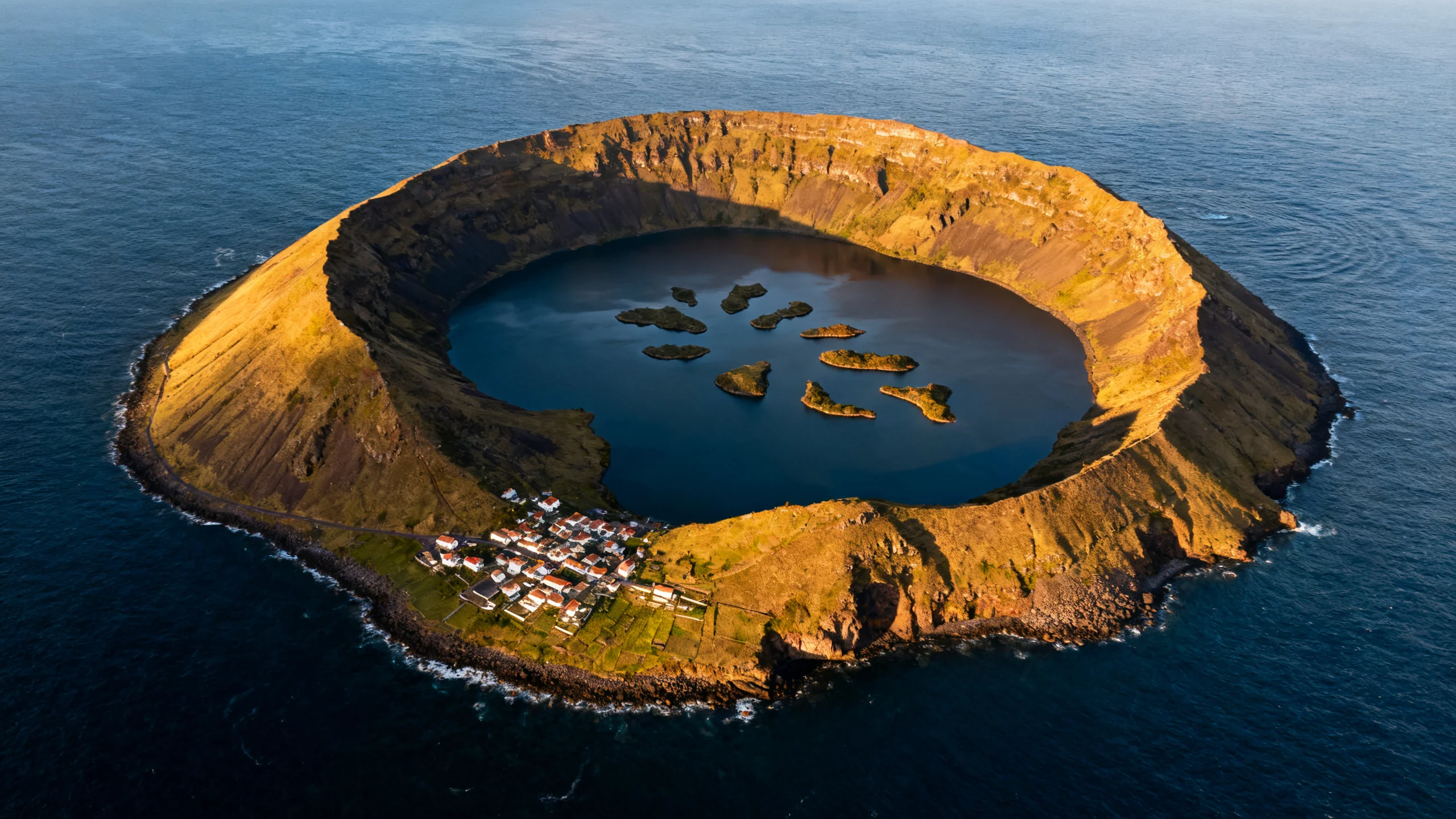
Corvo
The black island
Portugal’s smallest inhabited island, a single 17-square-kilometre volcano, a single village, four hundred people. A day trip from Flores, by boat when the sea allows.
- Best for:
- Day-trippers from Flores
- Suggested stay:
- 1 day
- Airport:
- CVU
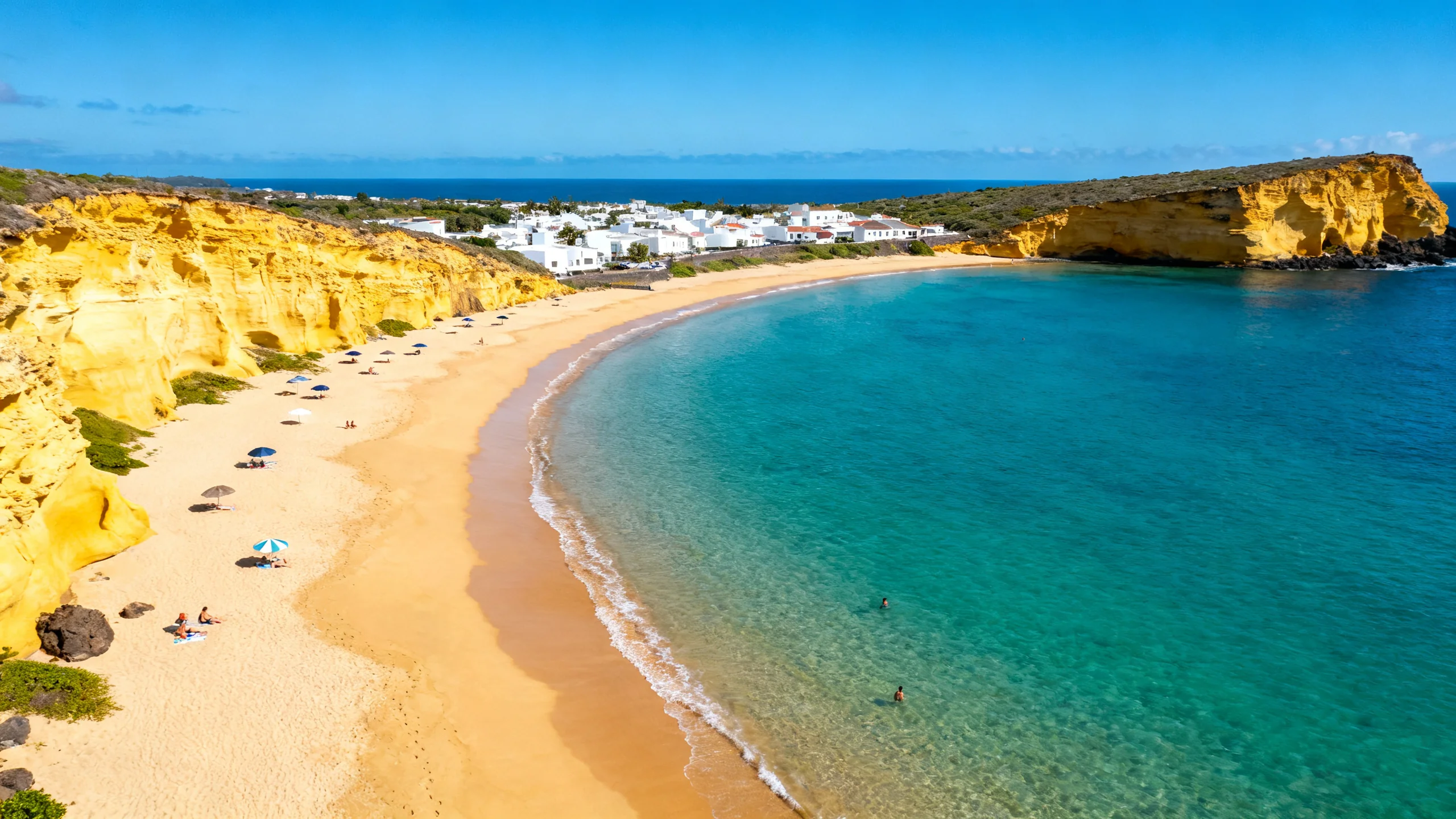
Santa Maria
The yellow island
The first island discovered (early 1400s) and the warmest of the nine. White-sand beaches (rare in the Azores) plus the Maré de Agosto, one of Portugal’s longest-running music festivals.
- Best for:
- Beaches, festival travellers
- Suggested stay:
- 2–4 days
- Airport:
- SMA
Choosing
Which island should you visit?
Most first-time visitors pick São Miguel, and they are usually right to do so, it has the broadest range of landscapes, the largest accommodation market, and direct flights from the most cities. If you have a week, adding a second island is realistic and gives a genuinely different experience.
3 to 5 days
São Miguel only
It is the most self-contained island and has enough variety to justify the entire trip. Don't fragment a short trip across multiple islands.
A full week
São Miguel + one more
São Miguel for 4–5 days, then an inter-island flight to Pico (for the volcano), Terceira (for the historic centre), or Faial (for Horta).
10+ days
The full island-hopper
Cover the central group properly: 2 days each on Pico, Faial, and São Jorge (the "golden triangle" connected by ferries), plus a few days on São Miguel.
One thing in particular
Pick by interest
Whales: São Miguel or Pico, April–October.
Hiking: Pico, São Jorge, Flores.
Beaches: Santa Maria.
Quiet: Graciosa, Corvo, Flores.
Logistics
Travelling between the islands
There are no direct ferries between São Miguel, Santa Maria, and the central or western groups. From São Miguel, plan to fly.
-
SATA Azores Airlines
Connects all nine islands. Most routes are 20–40 minutes. Reliable in good weather but routes to the western group (Flores, Corvo) and to small airfields cancel in winds, build a one-day buffer.
-
Atlanticoline
Ferries within the central group (Pico–Faial–São Jorge in particular). Summer service is dense, with multiple daily Madalena–Horta crossings. Winter service is reduced.
FAQ