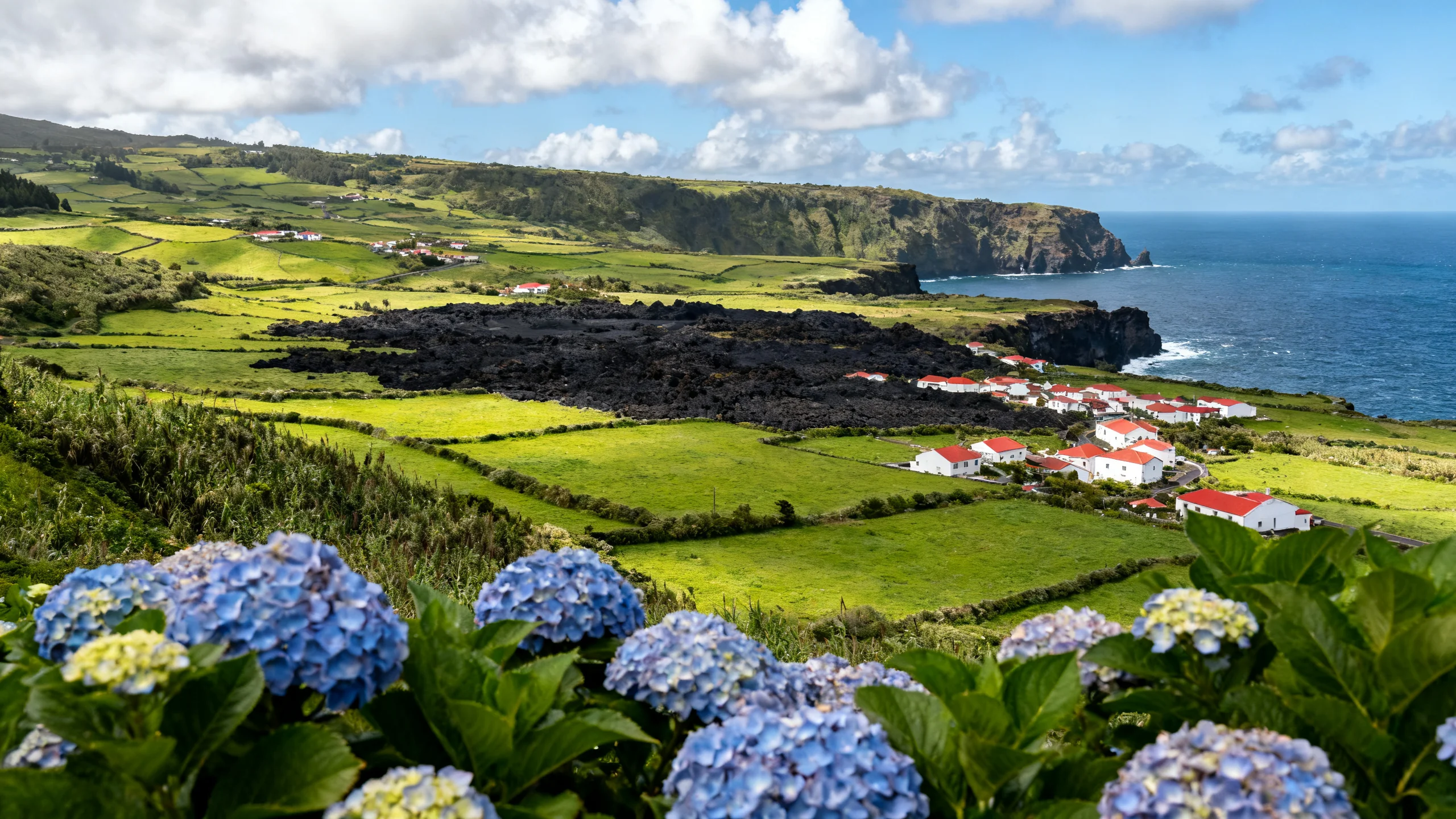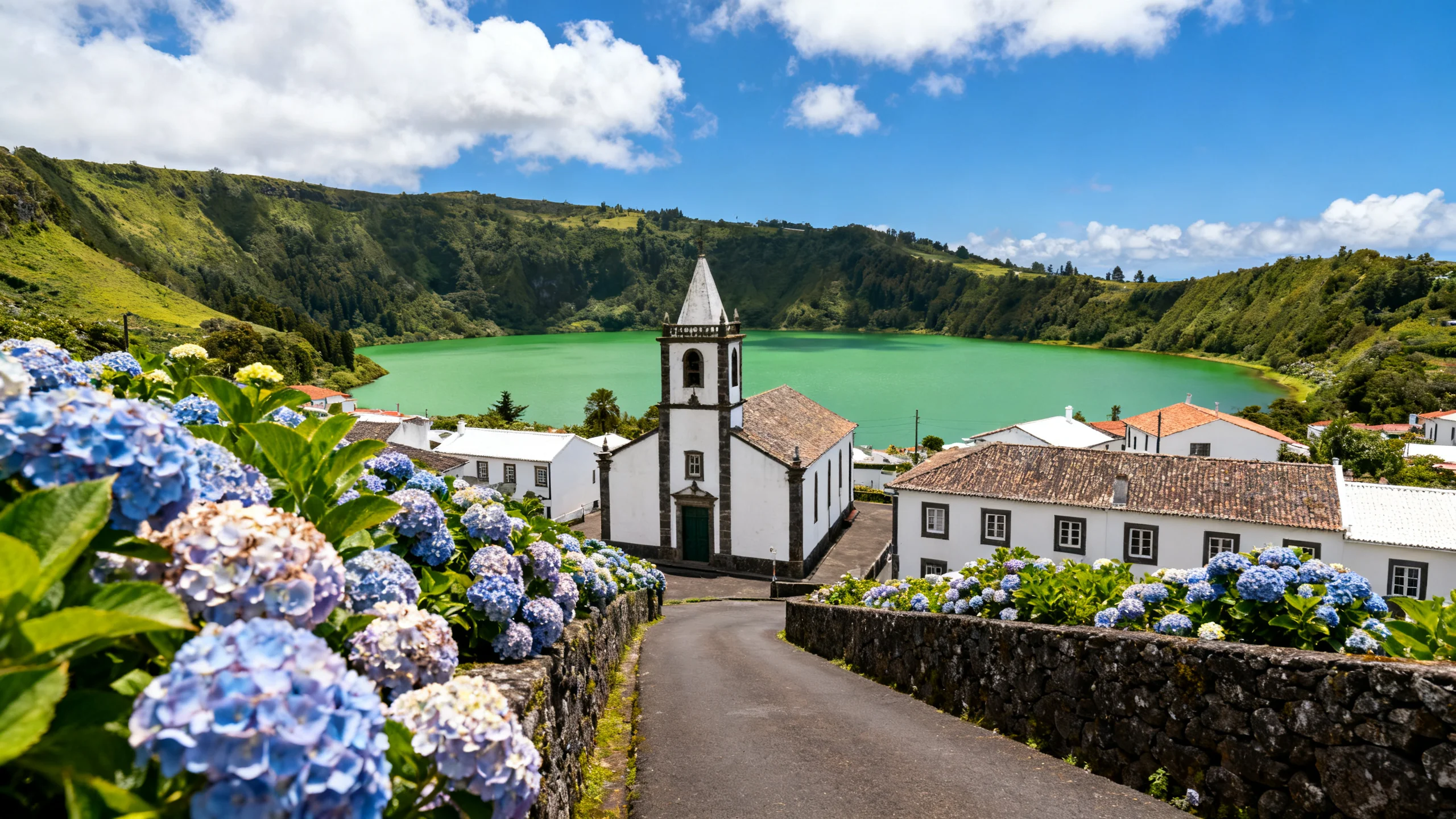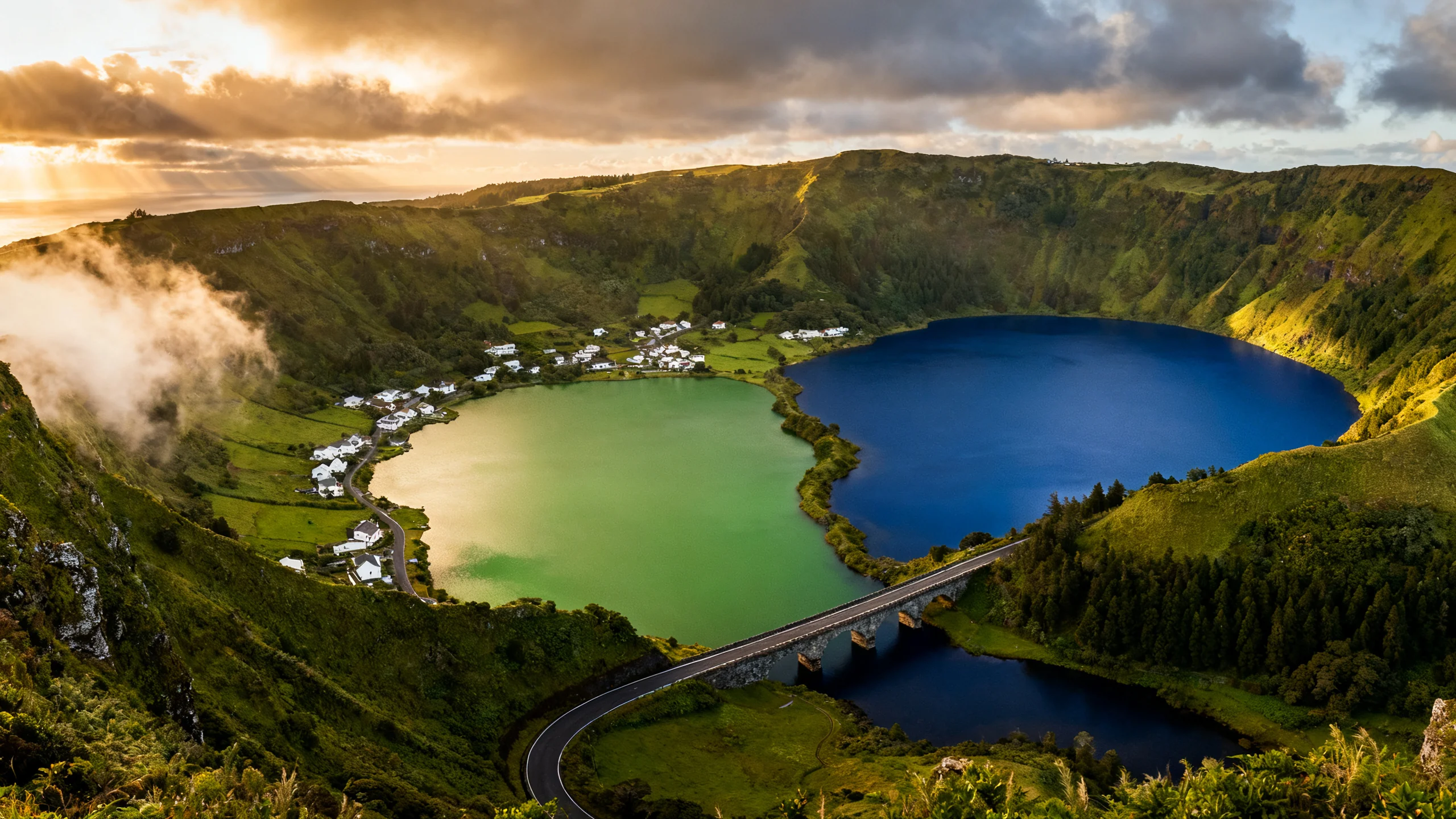
São Miguel concentrates almost every postcard image of the Azores in a single island: the twin lakes of Sete Cidades, the steaming volcanic valley of Furnas, the cliff-rim trail above Lagoa do Fogo, and one of the most reliable whale-watching seasons on Earth. It is the largest, most-visited, and best-connected of the nine islands, and the natural first stop for anyone discovering the archipelago.
São Miguel is the only island many visitors to the Azores ever see, and there are worse mistakes to make. At 65 kilometres long and 16 wide, it packs a startling range of landscapes into a single drive: black volcanic coastlines, cattle-dotted green pastures, twin crater lakes, geothermal valleys where the ground itself is warm to the touch, and a tea plantation that has been operating since 1883.
This guide covers what to expect, when to come, what to do, where to base yourself, and how to plan a stay of three days, five days, or a full week.
Why visit São Miguel rather than another island
The Azores are nine islands, and there are good reasons to visit the others. But if it is your first trip, São Miguel is the obvious choice. It has the largest international airport in the archipelago (PDL, served direct from Boston, Toronto, Lisbon, several European hubs), the most rental cars, the densest road network, the most accommodation options, and the broadest range of guided activities.
São Miguel offers most of the “iconic Azorean” experiences in one place: a UNESCO-grade volcanic crater landscape (Sete Cidades), active geothermal hydrology (Furnas), whale and dolphin watching with marine biologists on board, hiking trails for every fitness level, and tea-and-pineapple plantations that exist almost nowhere else in Europe.
You can move on to Pico (the volcano), Faial (sailors’ port of Horta), or Flores (the waterfalls) on a second trip. But four days on São Miguel gives a proper introduction to the archipelago, and a week leaves you with three or four hikes you missed and a list of reasons to come back.
Geography and climate
São Miguel is a long, narrow island. Three volcanic massifs run east-west, joined by a younger volcanic plateau in the middle. The two crater complexes of Sete Cidades (west) and Furnas (east) sit at opposite ends; the central plateau contains Lagoa do Fogo, the youngest and highest of the major crater lakes. The northern coast is steep and dramatic, the southern coast more accessible and where most of the population lives.
Pico da Vara, the island’s highest point at 1,103 metres, sits in the Nordeste region. It is the only breeding ground in the world for the Priolo, a critically endangered bullfinch endemic to São Miguel.
The climate is subtropical-maritime, mild year-round. Average temperatures sit between 14 °C in February and 23 °C in August. It rains often, with annual rainfall of 1,000–1,500 mm depending on altitude, but rarely in torrential bursts. Expect quick showers followed by sun, multiple times per day. The sea temperature stays warm enough for swimming from June to October (around 19–23 °C).
Top experiences in São Miguel
Sete Cidades from the rim. The standard view, from the Vista do Rei viewpoint, shows the two crater lakes side by side, one blue, one green, with the village of Sete Cidades on the isthmus between them. Drive there at any time, or commit to the hour-long Boca do Inferno walk for a different angle. Most visitors join a Sete Cidades jeep tour from Ponta Delgada, which combines the rim with the village and Lagoa do Fogo in a single day.
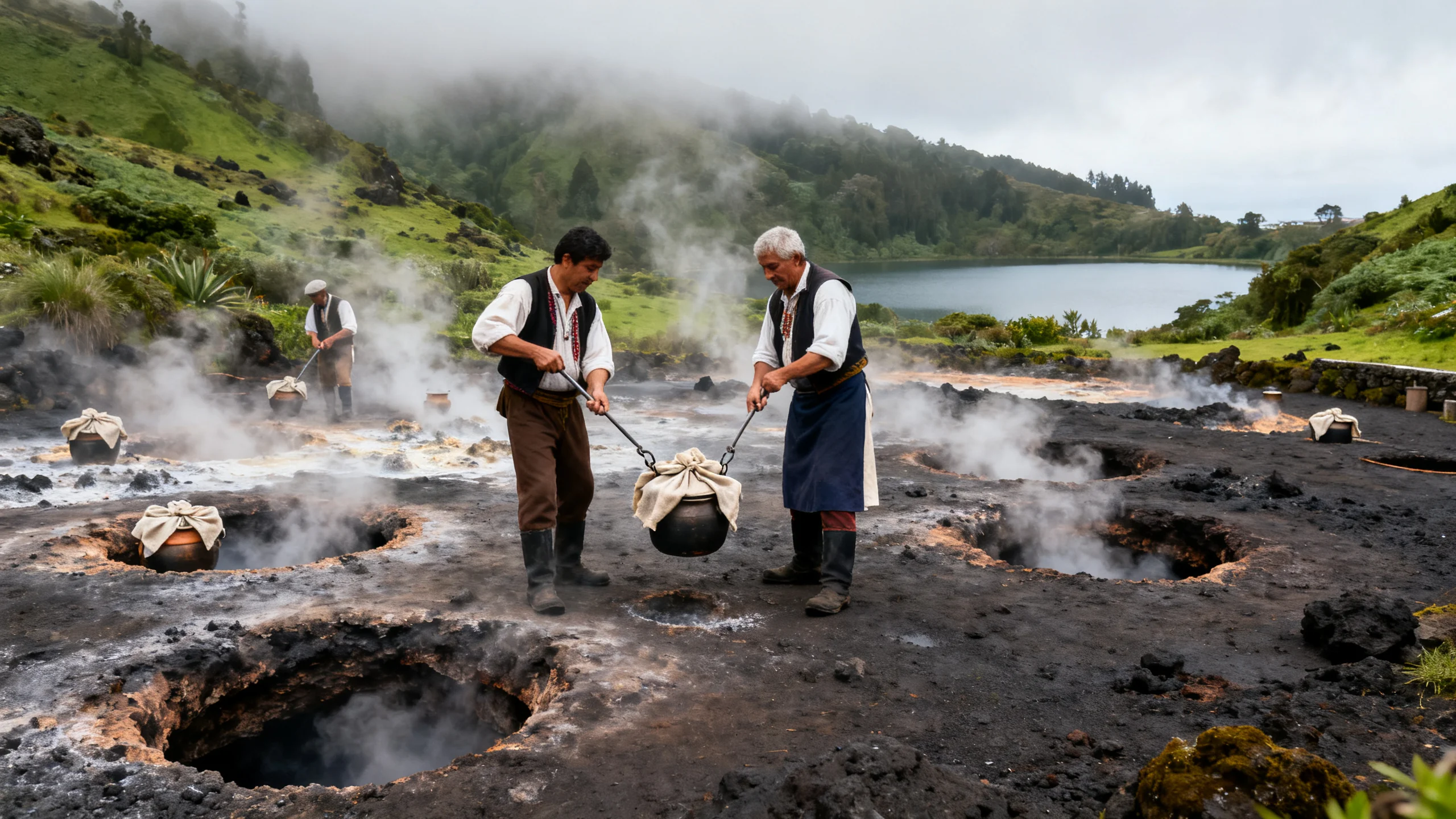
Furnas geothermal valley. A volcanic caldera where the ground steams, hot springs bubble out of the lakeside, and traditional cozido stew is buried in volcanic holes to cook for six hours. The Furnas tea, lake and volcano guided tour is the standard day-trip from Ponta Delgada and visits the Caldeiras (cooking holes), Terra Nostra thermal pool, and the José do Canto botanical garden.
Lagoa do Fogo. Set inside the Água de Pau massif, 575 metres above sea level, with no road touching the shoreline. The descent takes 45 minutes; the climb back up is steeper. Swimming is officially discouraged but ubiquitous in summer.
Whale watching from Ponta Delgada or Vila Franca do Campo. The Azores record more cetacean species than almost anywhere on Earth: sperm whales year-round, blue and fin whales in spring, common and bottlenose dolphins all year. Tours run from April to October. The whale and dolphin watching trip from Ponta Delgada has over four thousand reviews and is the most-booked option on the island.
Gorreana tea plantation. The only commercially active tea estate in continental Europe, in operation since 1883. Free self-guided visits include the factory floor and a tasting. Combine with the Nordeste circuit (eastern São Miguel); most full-day tours from Ponta Delgada include a stop here.
Where to base yourself
Ponta Delgada is the obvious answer for a first stay: most accommodation, restaurants, rental cars, and tour pickups originate here. From the city you are 45 minutes by car to Sete Cidades and 1h15 to Furnas. Both are manageable as day trips. The downside is the city itself is busy in summer and the seafront hotels can be impersonal.
Furnas suits travellers who want one or two days dedicated to the valley, the thermal pools, and longer hikes around Janela do Inferno or the Lagoa das Furnas. The village has good rural lodges and a slower pace.
Ribeira Grande (north coast, 30 minutes from PDL) is a small town with a growing food scene, surf access to Praia de Santa Bárbara, and proximity to Lagoa do Fogo and Gorreana. Good base for the central part of the island.
Nordeste is the remote pick: quiet, mountainous, far fewer tourists. The drive from Ponta Delgada takes about 1h30. Recommend only if you have at least a week on the island.
A dedicated guide on where to stay in São Miguel breaks this down by area, profile, and budget.
Getting to São Miguel
Direct flights to PDL operate from Lisbon (every day, 2h15), Porto (daily, 2h), Boston (5h via Azores Airlines and SATA), Toronto (5h30, seasonal direct), Frankfurt (4h, seasonal), and several other European hubs that vary by season. SATA Azores Airlines and TAP Portugal are the two main carriers.
From mainland Europe (Paris, Amsterdam, London, Madrid), most flights connect through Lisbon. A direct flight from a small number of European cities is available May to September only.
If you arrive in PDL and plan to visit other Azorean islands, inter-island flights with SATA Azores Airlines connect São Miguel to Terceira, Pico, Faial, São Jorge, Santa Maria, and Flores. Ferries (Atlanticoline) operate within the central group of islands but not from São Miguel. For ferries you need to fly to Faial or Pico first.
A dedicated guide on how to get to São Miguel covers routes, airlines, transit times, and seasonal direct flights for the main source markets.
Getting around
São Miguel is best explored with a rental car. Roads are paved, well-marked, and lightly trafficked outside Ponta Delgada. Driving is on the right. Distances are short (Ponta Delgada to the east end of the island is around 80 kilometres), but the roads wind through mountain passes, so allow more time than the map suggests.
For travellers without a driving licence or who prefer not to drive, a combination of guided day-tours, taxis, and the local bus network covers most of the island. Buses are infrequent, but the East and West full-day van tours cover the main sights of each half of the island and are the most efficient car-free option.
Suggested itineraries
3 days, first-time, Ponta Delgada base. Day 1: arrival, Ponta Delgada old town in the afternoon, dinner in the marina. Day 2: full-day West tour (Sete Cidades and Lagoa do Fogo). Day 3: full-day East tour (Furnas, Gorreana, and Nordeste).
5 days, covering most of the island. Days 1–3 as above. Day 4: whale watching morning, free afternoon. Day 5: a longer hike (Sete Cidades rim or Janela do Inferno), evening at the thermal pools of Terra Nostra.
7 days, adding niche experiences. Days 1–5 as above. Day 6: canyoning at Caldeirões or kayaking around the Vila Franca do Campo islet. Day 7: a relaxed day in Nordeste or surfing at Ribeira Grande’s Santa Bárbara beach.
Detailed day-by-day breakdowns are in the 3 days São Miguel, 5 days São Miguel, and 7 days São Miguel itineraries (all coming soon).
Best time to visit
There is no bad season for São Miguel, but the seasons feel quite different.
- May–June: the most reliable weather, the longest days, the best balance between bookable activities and crowd levels. Whale watching is in full swing. Top pick if you can pick.
- July–August: peak season, warmest sea, busiest accommodation. Festa do Espírito Santo runs through these months. Every village has its own date.
- September–October: still warm, sea still swimmable, gradual emptying of tourists from mid-September onward. Excellent for hikers.
- November–March: off-season. Rain is more frequent, days are shorter, some accommodation reduces availability. The whale-watching season is over but the resident sperm whales remain. Cheaper and quieter.
Practical tips
The currency is the euro. Tipping is uncommon and not expected (round up the restaurant bill if you wish). Tap water is drinkable across the island. The plug type is the standard European Schuko (Type C and F), 230 V.
Mobile coverage is good in populated areas, patchy in the interior. EU roaming applies for EU SIM cards. International SIMs may default to Portugal domestic rates; verify with your carrier.
Portuguese is the official language. English is widely spoken in tourism, but locals appreciate a few words of Portuguese: bom dia, obrigado, por favor.
Frequently asked questions
Is four days enough to see São Miguel?
For the headline sights (Sete Cidades, Furnas, Lagoa do Fogo, whale watching), four days is the comfortable minimum. Three days works if every hour is scheduled. Five days is the sweet spot for a relaxed trip.
Should I rent a car?
Strongly recommended. The bus network is thin and the island rewards flexibility. Rental cars are cheap (€25–40, around £21–34, per day in shoulder season). Manual transmissions are standard; automatic is available at a premium.
Is São Miguel expensive?
No, by Western European standards. A meal in a local tasca is €10–15 (around £8–13), a decent hotel room €70–110 (£60–94) in shoulder season, a rental car €25–40 (£21–34) per day. Guided whale-watching tours and full-day excursions are €60–90 (£51–77).
Can you swim at the thermal pools in summer?
Yes. Terra Nostra in Furnas and the Caldeira Velha public pool both operate year-round. Water temperature is around 35–40 °C. Swimwear required; the mineral-rich water will stain light fabrics permanently.
Are the Azores safe?
Yes. Crime rates are low, road conditions are good, healthcare is European standard (free emergency care for EHIC holders, reciprocal arrangements for many other countries). The main risk to visitors is overestimating their hiking pace in fog.