The food that locals actually eat, not the tourist version. Ten essential dishes with the right village to order each one, plus the three Azorean wine regions and where to taste them.
Azorean food is its own thing. Not quite Portuguese mainland, not quite Mediterranean, definitely not generic European. The diet evolved around what an Atlantic mid-ocean island could produce: volcanic-soil pastures (excellent beef and dairy), Atlantic fishing grounds (limpets, fresh tuna, octopus), and the imports the colonial trade brought (tea, pineapples, sweet potatoes, cumin).
This guide covers the ten dishes you actually want to try, where the right version is served, the three Azorean wine regions, and the restaurants that locals send their visiting cousins to.
The ten dishes that matter
1. Cozido das Furnas (São Miguel)
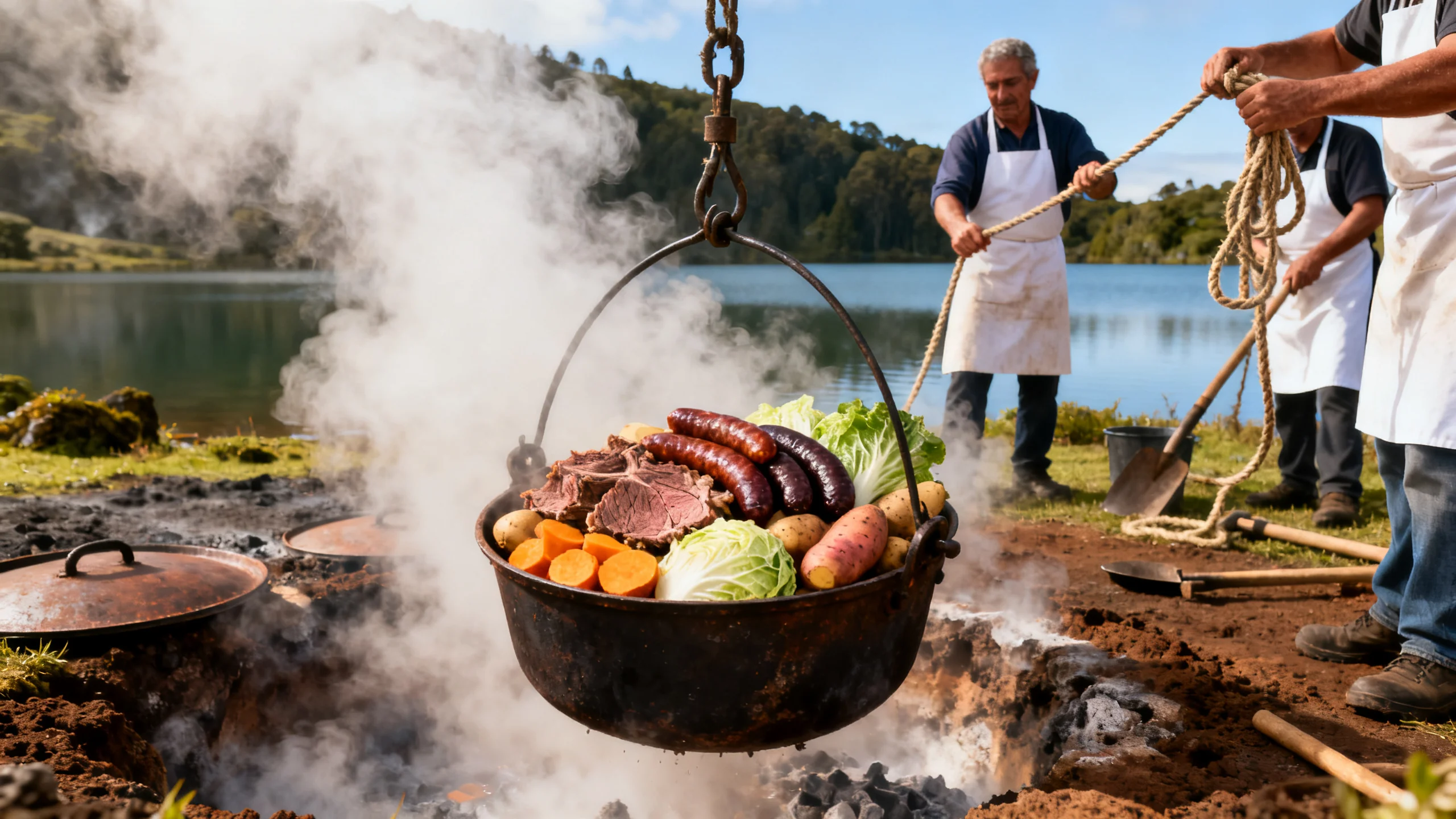
The signature dish of the islands. Meat, sausages, cabbage, sweet potato and root vegetables, layered into a cast-iron pot, buried in the volcanic ground at Furnas Lake, and slow-cooked for six hours by the geothermal heat. The pots are lifted at 11:30am sharp and arrive at the village restaurants by noon.
Where to eat: Restaurante Tony’s, Caldeiras e Vulcões, or Casa de Pasto Comendador Manuel Joaquim (the last is the local favourite). Sunday lunch is the moment. Around €18 to €25.
2. Lapas grelhadas (limpets)
Atlantic limpets grilled over charcoal with garlic, butter and a splash of lime. Salty, mineral, slightly chewy. Served as a starter, six to twelve per plate.
Where: any pier-side restaurant. Best on Faial and Pico where the limpets are at their freshest. €7 to €11 per dozen.
3. Bife à regional (Azorean steak)
A thick steak (typically rump or sirloin), pan-fried with garlic, white wine and butter, served with chips and an egg on top. The beef comes from the volcanic-pasture cattle, which is what makes the local version distinctive.
Where: any small restaurant. Casa Cibrão in Lagoa (São Miguel) or Borda d’Água in Madalena (Pico) do it particularly well. €14 to €19.
4. Atum à moda da Madalena (Madalena-style tuna)
Fresh tuna steaks pan-fried with onions, garlic, peppers and white wine, then finished with a tomato-paste sauce. Pico’s classic.
Where: Madalena village on Pico. Restaurante Ancoradouro is the benchmark. €13 to €17.
5. Polvo à lagareiro (octopus with potatoes)
Octopus roasted with garlic, olive oil and smashed baby potatoes, finished with parsley. Mainland classic done extremely well in the Azores.
Where: Cais 20 in Ponta Delgada (São Miguel) and Restaurante O Pescador in Horta (Faial). €17 to €22.
6. Sopa de inhame (yam soup)
A thick, savoury soup of local yams, kale and pork knuckle. Peasant dish, found in São Miguel village restaurants and rural cottages. A whole meal in a bowl. Around €5 to €8.
7. Alcatra (Terceira pot roast)
Terceira’s signature dish. Beef chuck or shank, slow-cooked in a clay pot with bacon, onions, garlic, allspice and Verdelho wine for 3 to 4 hours. Served with sweet bread on the side. Around €16 to €22.
Where: O Caneta in Altares, or any traditional restaurant in Angra do Heroísmo.
8. Queijo de São Jorge (São Jorge cheese)
A hard cow’s-milk cheese aged 3 to 24 months, with DOP certification since 1986. Sharp, slightly piquant, slightly nutty. The 12-month aged is the standard buying age.
Where: Uniqueijo cooperative shop in Beira (São Jorge), or any delicatessen in Ponta Delgada and Angra. €18 to €25 per kilo.
9. Bolo lêvedo (sweet flatbread)
A soft, slightly sweet flatbread the size of a dinner plate, cooked on a griddle. Served toasted with butter and jam for breakfast, or warm with cheese or ham for lunch. Originated in Furnas.
Where: any bakery in Furnas village, or Padaria do Mirante in Vila Franca do Campo. €1.20 to €2.50 each.
10. Massa sovada (sweet bread)
A brioche-style sweet yeast bread, traditionally baked for Holy Spirit festivals (Festas do Espírito Santo, June to September). Now sold year-round. Light, airy, faintly lemony.
Where: any traditional bakery, especially in Vila Franca do Campo (São Miguel) or Velas (São Jorge). €4 to €8 per loaf.
The three wine regions
Wine has been made on the volcanic islands since the 15th century. Three regions are commercially significant today.
| Region | Grape signature | Style |
|---|---|---|
| Pico (DOP) | Verdelho, Arinto dos Açores | Mineral whites, fortified |
| Graciosa (DOP) | Verdelho, Terrantez do Pico | Fresh dry whites |
| Biscoitos (Terceira, DOP) | Verdelho | Volcanic mineral whites |
Pico is the most important by far. The UNESCO-listed currais (small walled vineyards) cover hundreds of hectares of black volcanic rock, each plot enclosed by 1.5-metre lava-stone walls that shelter the vines from the Atlantic wind. The DOP wines are bone-dry, mineral, high-acid whites, often compared to Albariño or Muscadet.
The fortified wines (Lajido, Czar) are the historical curiosity. The 19th-century Pico Czar was Catherine the Great’s table wine in Saint Petersburg. Production crashed after the phylloxera plague (1860s) and has only recently recovered.
What to drink besides wine
Cerveja Especial. The local pilsner-style beer, brewed by Melo Abreu in Ponta Delgada since 1894. €1.50 to €3 a bottle. Lighter than European mass-market lagers.
Kima. The Azorean passion-fruit soft drink, sold everywhere. Sweet, tropical, slightly tart. €1.50 a can. Worth trying once.
Tea. Gorreana and Chá Porto Formoso produce the only commercial European-grown tea. €2 to €5 per 100 g packet at the plantations. The Orange Pekoe black is the export benchmark.
Maracujá liqueur. Passion-fruit liqueur, served as a digestif or over ice cream. Found in any village restaurant. €3 to €5 a shot.
Frequently asked questions
Is the Azores good for vegetarians?
Manageable but not strong. Traditional Azorean cuisine is heavily meat and fish based. In Ponta Delgada, Furnas and Angra, several restaurants now offer vegetarian sections (Bartholomeu Petiscos, Mesa d’Oito, Tasca). Outside the main towns, expect to order around the menu (vegetable soup, salad, cheese plate, potato dishes). Vegan is significantly harder, plan to self-cater for breakfast and lunch on the smaller islands.
What about gluten-free?
Most main dishes (grilled fish, steak, octopus, limpets, vegetable soup) are naturally gluten-free. The bread basket and the malasada-style pastries are the obvious avoidances. Ask for “sem glúten” (without gluten); awareness is reasonable in Ponta Delgada restaurants, patchy in rural villages.
Where do locals actually eat?
The “tasca” and “casa de pasto” categories. Small family-run rooms with 5 to 10 tables, paper-tablecloth, daily set menu for €8 to €12 at lunch. Try Tasca da Praça in Lagoa, Casa do Comendador Manuel Joaquim in Furnas, A Tasca in Ponta Delgada. These places do not take reservations beyond a phone call and they fill at 1pm sharp.
Are there Azorean food markets?
The Mercado da Graça in Ponta Delgada (open Monday to Saturday mornings) is the best food market on São Miguel: fresh fish on the lower floor, fruit and cheese upstairs, two cafés with local breakfasts. Angra do Heroísmo has a smaller but charming market on Praça da Restauração. Most smaller islands have a weekly Saturday market in the main village.
Can I bring Azorean cheese or wine home?
Inside the EU, freely. Vacuum-packed São Jorge cheese travels well in checked luggage (the seal is good for 30+ days unopened). Wine in bottles, pack carefully in clothes layers; six bottles is the casual maximum before duty. For non-EU travellers, check your country’s allowance (usually 2 to 5 litres of wine, small cheese quantities accepted by most customs).