Best beaches in São Miguel
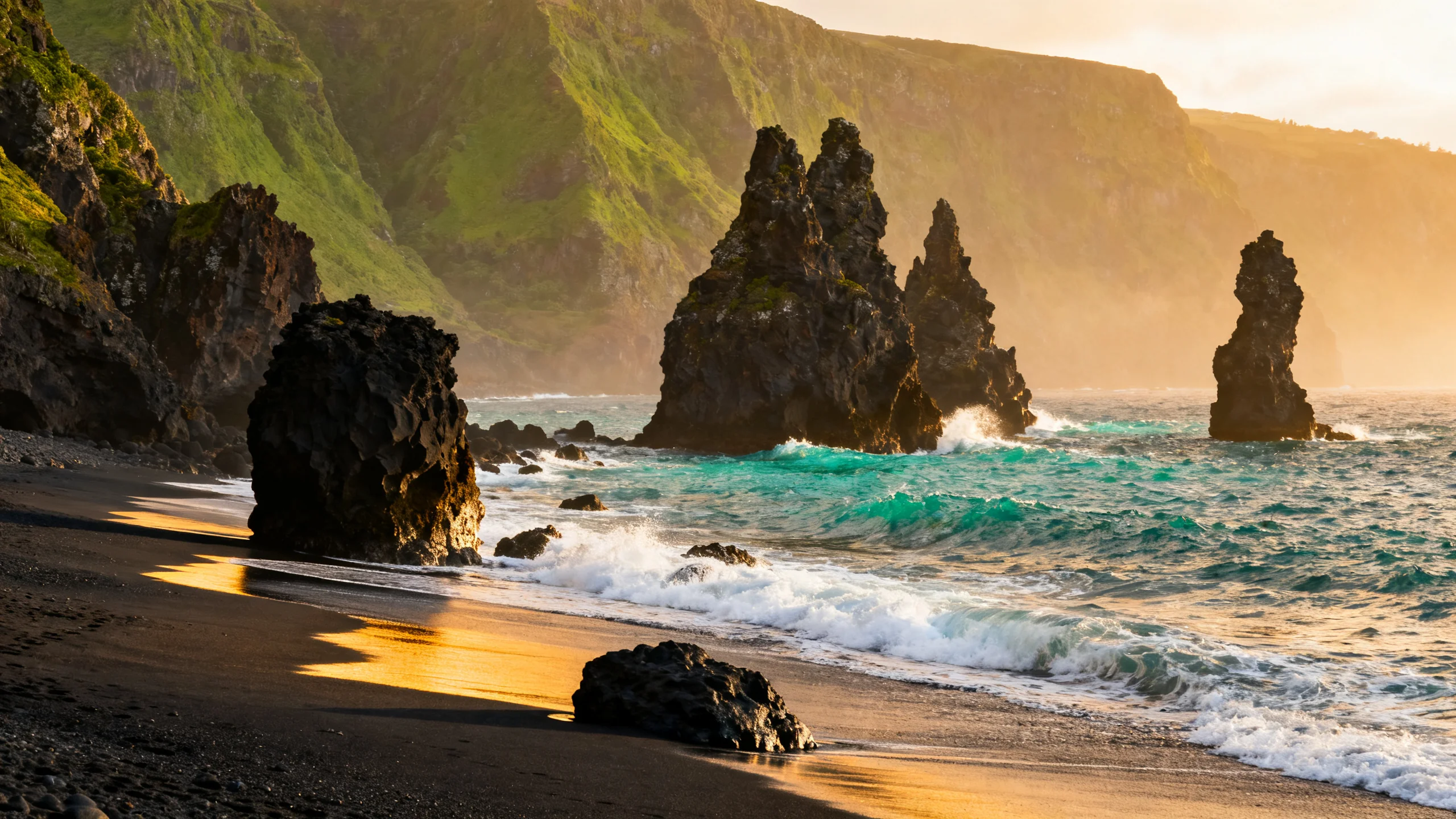
First, a calibration. The Azores are volcanic islands in the mid-Atlantic. The beaches here are black sand, often with rock formations, and the water rarely climbs above 23 °C even in August. If you are looking for white sand and tropical heat, this is the wrong archipelago. If you are open to a different kind of beach (natural ocean pools, dramatic basalt cliffs, the occasional surf break) São Miguel has seven worth visiting.
Quick orientation
The Azorean beach scene divides into three categories. The first is true sand beaches. Typically black or grey volcanic sand, with the full beach kit (lifeguards in summer, café, parking, sometimes a boardwalk). The second is ocean pools, called piscinas naturais, rectangular concrete-and-rock structures built where the basalt coast already had natural pools, with steps and ladders for access. The third is wilder, harder-to-reach coves, usually unpopulated, no facilities, sometimes only swimmable in calm sea.
Sea temperature: 17 °C in March, 19 °C in June, 22 °C in August, back to 19 °C in November. Locals swim year-round; visitors generally find the water cold before late May.
1. Praia de Santa Bárbara, Ribeira Grande
The main surf beach of São Miguel, on the north coast just outside Ribeira Grande. A long stretch of dark-grey volcanic sand, exposed directly to the Atlantic, with consistent swell year-round and the island's main surf school cluster.
Best for: surfers (all levels), surf-curious visitors who want a lesson, anyone who wants a "real" beach day with space to spread out.
Practical: large free parking, lifeguard service in summer (July–September), café and bar on-site, public showers, boardwalk back to Ribeira Grande town centre. The waves can be too powerful for casual swimming in winter, check conditions or just swim at the protected end of the beach.
For first-time surfers, the Ribeira Grande group surf lesson operates directly from Santa Bárbara: 2 hours, wetsuit and board included, around €45.
2. Piscinas Naturais dos Mosteiros
Natural ocean pools on the west coast, in the village of Mosteiros, just down the road from Sete Cidades. A series of large rectangular rock pools fill at high tide and become swimmable lagoons at mid and low tide, sheltered from the open Atlantic by the very basalt formations that gave Mosteiros (literally "monasteries") its name.
Best for: photogenic swimming, families with children (the pools are shallow and protected), a late-afternoon combination with a sunset above the four basalt islets just offshore.
Practical: free, basic facilities (changing rooms, a small café in season), street parking nearby. The pools are at their best from June to September; outside that window, the swells can wash over them and they are not usable.
3. Praia do Pópulo, Ponta Delgada
The closest "sand beach" to Ponta Delgada, about 10 minutes east of the city by car. A long, family-friendly stretch of dark sand with a full boardwalk, restaurants, lifeguards, and the easiest access of any decent beach on the island.
Best for: visitors based in Ponta Delgada without a car (a city bus reaches the boardwalk), families, anyone who wants a beach without committing to a 45-minute drive.
Trade-offs: Pópulo is the most "built-up" beach on the island, the boardwalk is busy in summer, parking can be a challenge on weekend afternoons. The water quality is good, but the experience is more "town beach" than "wild beach."
4. Piscinas Naturais da Caloura
On the south coast, midway between Ponta Delgada and Vila Franca do Campo. A small, sheltered cove of volcanic rock with natural pools and a famous seafood restaurant (Bar Caloura) right on the water. The atmosphere is local rather than tourist, many of the people swimming here are from the surrounding villages.
Best for: a quieter swim with a lunch built in, snorkeling along the basalt walls, an alternative to the better-known Mosteiros pools.
Practical: small free parking that fills early in summer, arrive before 11am or after 4pm. No services beyond the restaurant. The pools are deep enough for proper swimming; non-swimmers should stick to the shallowest section near the steps.
5. Praia dos Moinhos, Porto Formoso
North coast, between Ribeira Grande and Gorreana. A small, sheltered beach of dark grey sand at the foot of basalt cliffs, with one of São Miguel's most photogenic settings, a half-moon of sand backed by green pastures and the cliffs above. Smaller and less developed than Santa Bárbara, generally calmer water.
Best for: a beach stop on the way to Gorreana tea or Nordeste, photography, swimming when Santa Bárbara has too much surf.
Practical: small parking lot, no lifeguards outside peak season, no café on the beach itself but a few options in Porto Formoso village (5 minutes away).
6. Ilhéu de Vila Franca
The volcanic islet off the south coast, a perfect circular crater rim with a natural lagoon at the centre, accessible by a 10-minute ferry from Vila Franca do Campo harbour. Not technically a "beach" but it appears on every São Miguel best-of list because the swimming inside the protected lagoon is one of the most distinctive experiences on the island.
Best for: a half-day excursion, swimming inside a volcanic crater, kayaking, snorkeling along the outer cliffs.
Practical: ferry runs May to September, €10 round-trip. A daily visitor cap applies, book the ferry slot in advance for July and August. The islet has only basic facilities (toilets, a small bar). For a more active version, the Vila Franca do Campo islet kayaking experience takes you out by kayak rather than ferry, with snorkeling around the outer reef included.
7. Praia da Viola, Nordeste
Tiny, remote beach in the far east of the island, accessible by a 15-minute walk from the road. Dark sand, dramatic basalt cliffs on both sides, almost always empty, the trade-off is no facilities of any kind and a beach that is fully exposed to north-coast swell.
Best for: travellers with a rental car who are already exploring Nordeste and want a swim stop, the experience of a deserted Azorean beach in summer.
Practical: roadside parking, no services. Bring water and a towel; expect no signage. The walk down is easy, the return is steeper. Do not swim in rough conditions, there is no lifeguard, no easy exit, and the surf can be powerful.
What about the islet sand near Vila Franca?
The lagoon inside the Vila Franca islet (covered above) is a natural saltwater pool, not a sandy beach, there is no sand inside the crater. The "swimming" is from the rocky shore of the lagoon directly into deep water.
Pools vs beaches: which to choose
For families with young children, the natural pools (Mosteiros, Caloura) are easier than the open beaches, calmer water, shallower sections, and no concerning rip currents. The trade-off is less space and no real "beach" feeling.
For surfers and people who want a long walk on the sand, the open beaches (Santa Bárbara, Pópulo) work better. The trade-off is Atlantic conditions, colder, choppier, with stronger currents.
For solitude and dramatic scenery, the smaller and more remote spots (Praia dos Moinhos, Praia da Viola) win on both counts but require more effort to reach.
When to go
The beach season runs roughly June to early October. Outside that window, water temperature drops below 19 °C and the weather is less reliable for sun. Wetsuits extend the surf season year-round. Santa Bárbara has surf any month of the year, but in winter the crowds disappear.